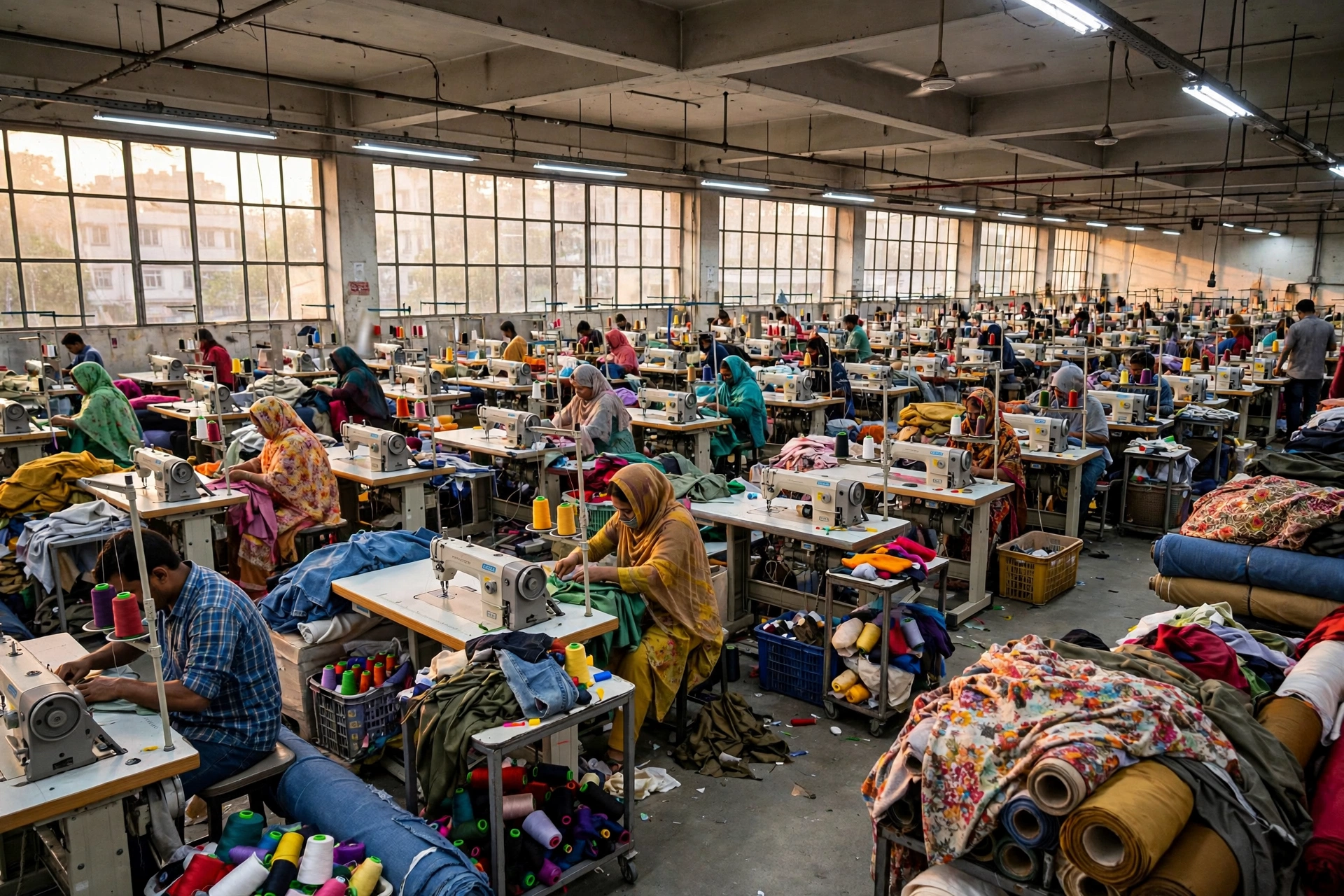
DHAKA — Bangladesh has raised the minimum monthly wage for garment workers by 36 percent, lifting it to 17,000 taka (about $136) from 12,500 taka, after weeks of violent protests that shut factories and disrupted production in the country’s most important export industry.
A government-appointed wage board approved the new structure early on Wednesday after nearly 12 hours of negotiations between workers’ and employers’ representatives. The six-member board, which includes two representatives each from workers and employers, approved the 17,000-taka figure in a 4–2 vote, with two members backing the workers’ demand for 18,000 taka, workers’ representative Babul Akhter said.
The increase falls far short of what workers had demanded. They initially sought a minimum wage of 30,000 to 32,000 taka — more than double the old rate — before lowering their demand to 18,000 taka during the talks. Factory owners first offered 15,000 taka and later raised their offer to 17,000. It is the smallest percentage wage rise in more than a decade, well below the 56 percent increase in 2023, 51 percent in 2018 and 77 percent in 2013.
Under the four-grade structure, monthly wages will range from 17,000 taka for Grade 4 workers to 21,500 taka for Grade 1 workers. Third-grade workers will receive 19,200 taka and second-grade workers 20,000 taka. The new structure takes effect on December 1, with workers expected to receive the revised pay from January.
The decision did little to ease tensions. Workers blocked a major highway in Gazipur, a garment hub on the outskirts of Dhaka, on Wednesday, and police fired tear gas and sound grenades to disperse them.
The protests, which began in late October, have hit an industry that employs more than four million people, supplies retailers including H&M, Zara, Walmart, Target and Gap, and generates more than 80 percent of Bangladesh’s export earnings. The Bangladesh Garment Manufacturers and Exporters Association said 397 factories were unable to operate on Tuesday, while another 84 remained closed under the labour law’s “no work, no pay” provision. The manufacturers’ body has estimated the disruption cost about $428 million in lost production, with orders worth $254 million moving to other countries.