
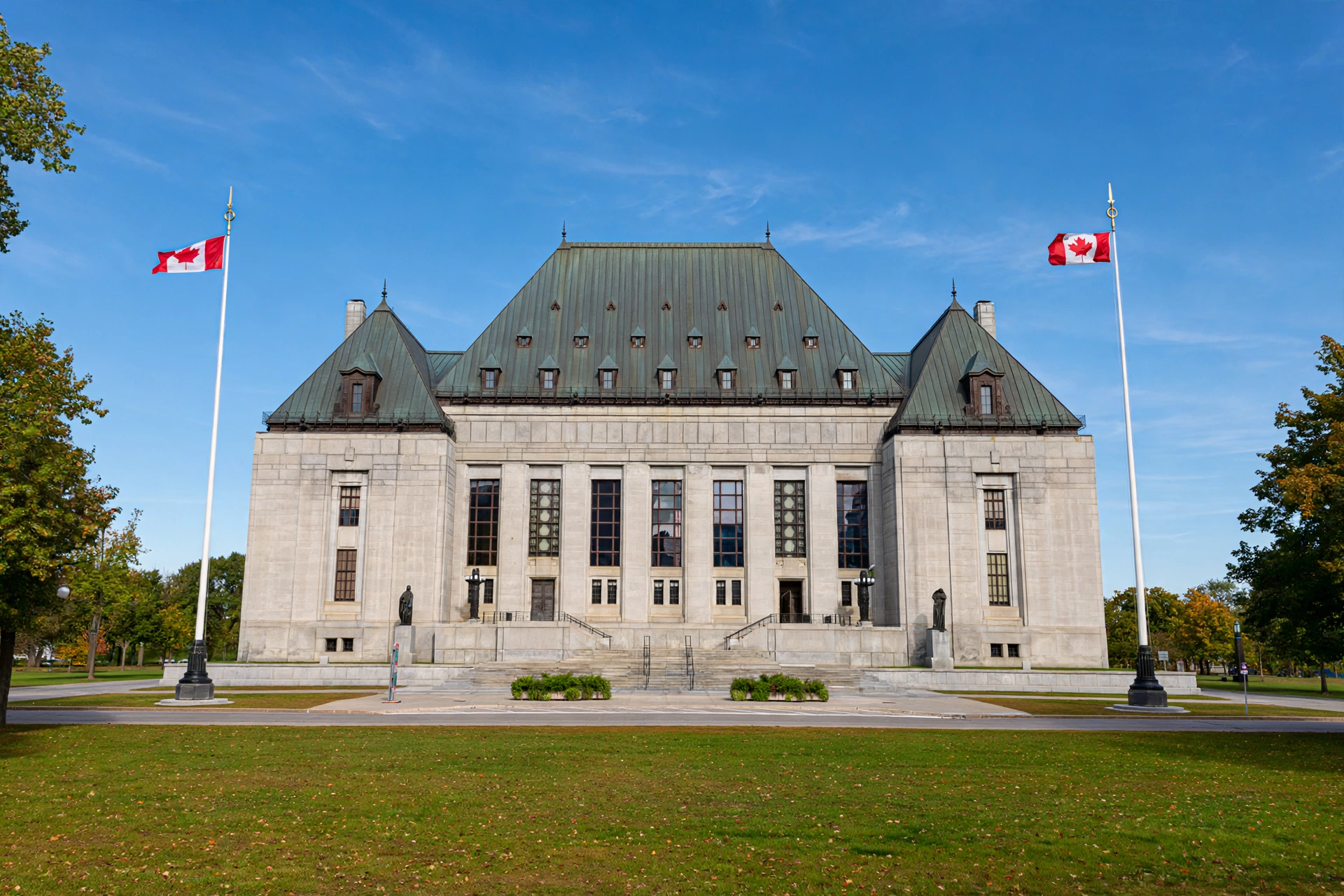
OTTAWA — The Supreme Court of Canada on Friday upheld most of Quebec’s secularism law, Bill 21, keeping in place a ban on certain public servants wearing religious symbols while they work.
The seven-judge court ruled in English Montreal School Board v. Quebec (Attorney General), 2026 SCC 41, that Quebec had validly used the notwithstanding clause — section 33 of the Canadian Charter of Rights and Freedoms — to shield the law from being struck down. The court found the Act respecting the laicity of the State “valid and operative”.
Bill 21, passed by Quebec’s National Assembly on June 16, 2019, bars people in positions of authority — including teachers, police officers, judges, prosecutors and school principals — from wearing religious symbols such as hijabs, turbans, kippahs and crosses while performing their duties.
The ruling came with one exception. The judges agreed that section 8 of the law, which requires members of Quebec’s National Assembly to carry out their functions with their faces uncovered, infringes the democratic rights guaranteed by section 3 of the Charter. Because the notwithstanding clause cannot override section 3, that provision is of no force or effect as it applies to elected members of the assembly.
The court was divided on several points. Four of the seven judges upheld the law in full, apart from the section 8 exception, while others would have gone further. Three judges said the court could declare that parts of the law violate Charter rights to freedom of religion, freedom of expression and equality — but the court ultimately made no such declaration. The court also rejected, by a 4-2 margin, the argument that the law infringes the minority-language education rights of Quebec’s English-speaking community.
The decision settles a constitutional fight that has run for more than seven years and gives the most detailed guidance yet from Canada’s top court on the notwithstanding clause, which allows legislatures to override certain Charter rights for up to five years at a time. The court had only examined the clause directly once before, in its 1988 ruling in Ford v. Quebec.
Civil liberties groups have criticised the law as discriminatory, saying it disproportionately affects Muslim women. Quebec’s government has defended it as necessary to protect the province’s secular character and the neutrality of the state.