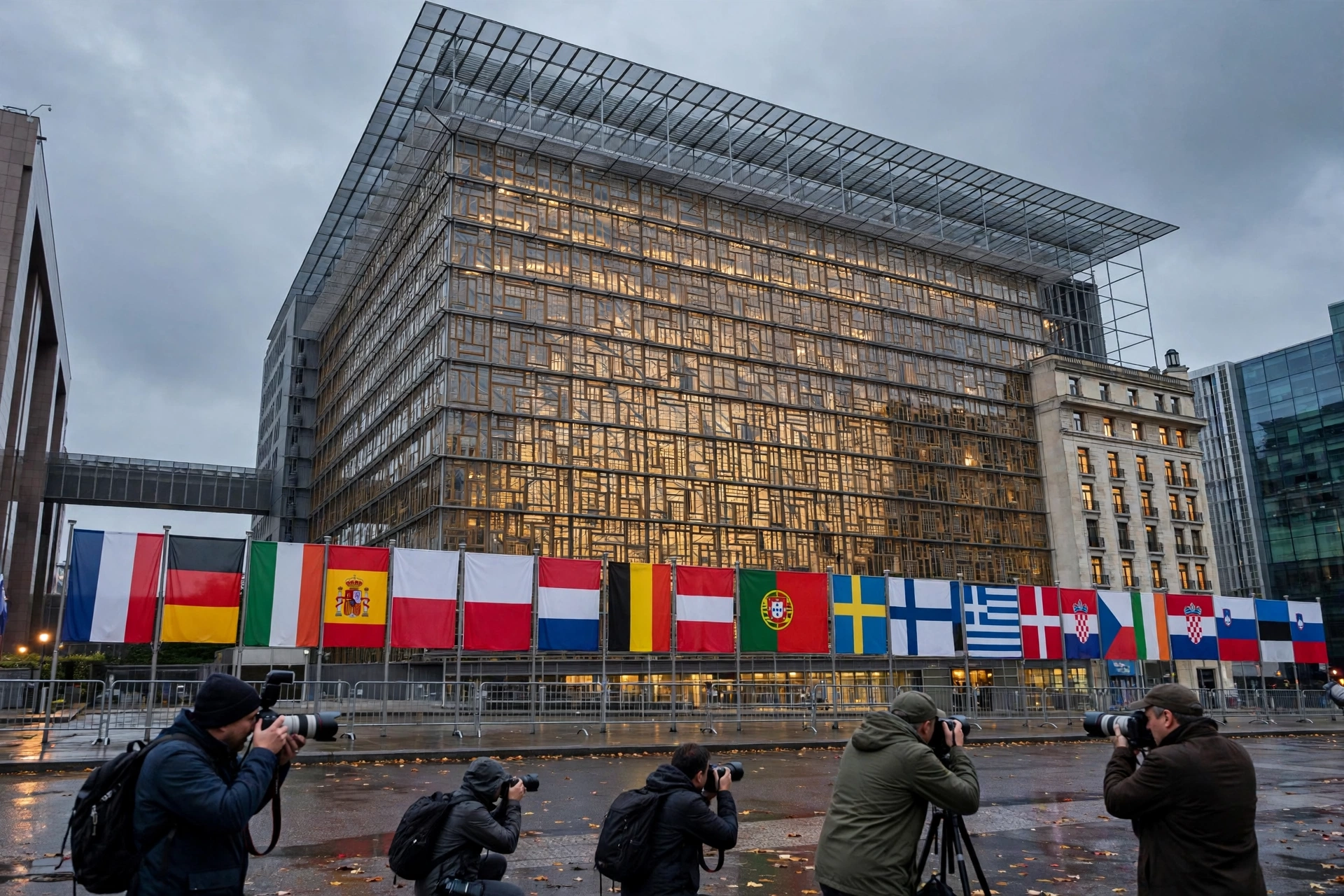
BRUSSELS — European Union leaders ended a special summit in Brussels on Thursday without agreement on the bloc’s long-term budget or a proposed €45 billion loan for Ukraine, after more than 12 hours of talks exposed deep divisions over spending and support for Kyiv.
European Council President António Costa, who chaired the meeting, said 24 of the 27 member states backed the proposed loan for Ukraine in 2027, while Bulgaria said it would take part only in financing non-military spending. A political decision on the loan was deferred until the December European Council summit.
The European Commission proposed the loan on 18 November to help cover part of Ukraine’s estimated €70 billion funding gap for 2027. Up to €25 billion would go to military support and up to €20 billion to financing government spending. The loan would be raised on capital markets and would be additional to the €90 billion Ukraine Support Loan already agreed for 2026 and 2027. Under the proposal, Kyiv would repay the principal only once Russia pays war reparations.
Leaders also failed to agree on the EU’s next seven-year budget for 2028–2034. Costa tabled a compromise worth about €1.582 trillion, trimmed from the Commission’s original proposal of nearly €2 trillion. The package includes about €100 billion for Ukraine over seven years and about €140 billion to repay pandemic-era borrowing. The budget requires unanimity among all 27 member states and the consent of the European Parliament.
French President Emmanuel Macron ruled out a deal at the summit and set a year-end deadline, saying he would sign a good agreement when leaders return to Brussels in December. The second day of the summit was cancelled, and leaders are now expected to resume talks on 17–18 December. Costa will prepare a new compromise proposal in the coming weeks.
German Chancellor Friedrich Merz said positions remained far apart, while Finnish Prime Minister Petteri Orpo said leaders were nowhere near the finish line. Leaders had hoped to lock in Kyiv’s financing before national elections in several countries next year, including France, Italy, Poland, Greece, Estonia, Finland and Slovakia, which could complicate the talks.