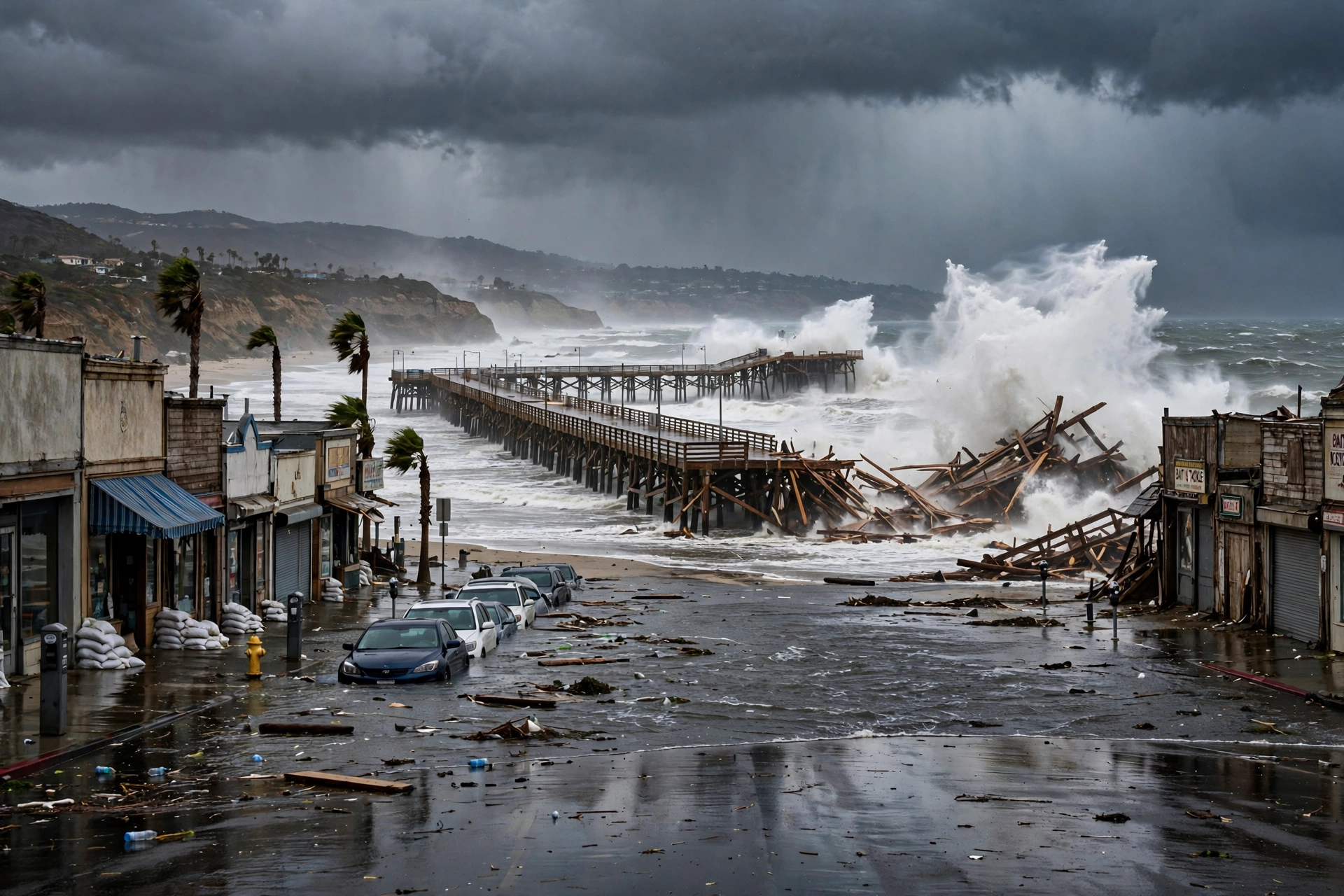
PACIFICA, California — Part of the historic Pacifica Municipal Pier collapsed into the Pacific Ocean on Wednesday as record king tides and waves of 20 to 30 feet pounded the Northern California coast. Video of the moment showed the L-shaped end of the pier snapping off and dropping into the surf at around 11 a.m. local time.
No one was on the pier when it fell. The structure had been closed to the public since June, after engineers found serious cracks near its entrance. The 1,140-foot pier, built in 1973, is a well-known fishing landmark at Sharp Park Beach, just south of San Francisco.
The collapse came as king tides — the highest tides of the year, when the gravitational pull of the moon and sun align — combined with a powerful west-northwest swell and storm surge linked to a strong El Niño. The National Weather Service warned of breaking waves 20 to 30 feet high, about two to three storeys tall, and urged everyone to stay out of the water because of life-threatening surf.
Floodwater pushed more than a block inland in Pacifica’s Sharp Park neighbourhood, swamping streets and beachfront homes, breaching sections of the seawall and forcing street closures. Further north, Marin County issued an evacuation warning for beachfront properties at Stinson Beach, though it was later lifted as conditions eased.
San Francisco’s tide gauge set a new November record, reaching 8.23 feet at Crissy Field and breaking a mark that had stood since 1982. In Southern California, record-high tides flooded homes in Orange County as the same swell swept down the coast.
Coastal flood and high surf warnings remained in effect through Thursday afternoon, with forecasters warning that the next king tides arrive on December 23 to 25, and again on January 21 to 22, 2027, in the middle of what could be the strongest El Niño on record.
Officials said the section of the pier that came down had failed in earlier storms, so its collapse was not entirely unexpected. But the scale of Wednesday’s damage has renewed questions over the future of the ageing pier and the cost of repairing it and the damaged seawall.