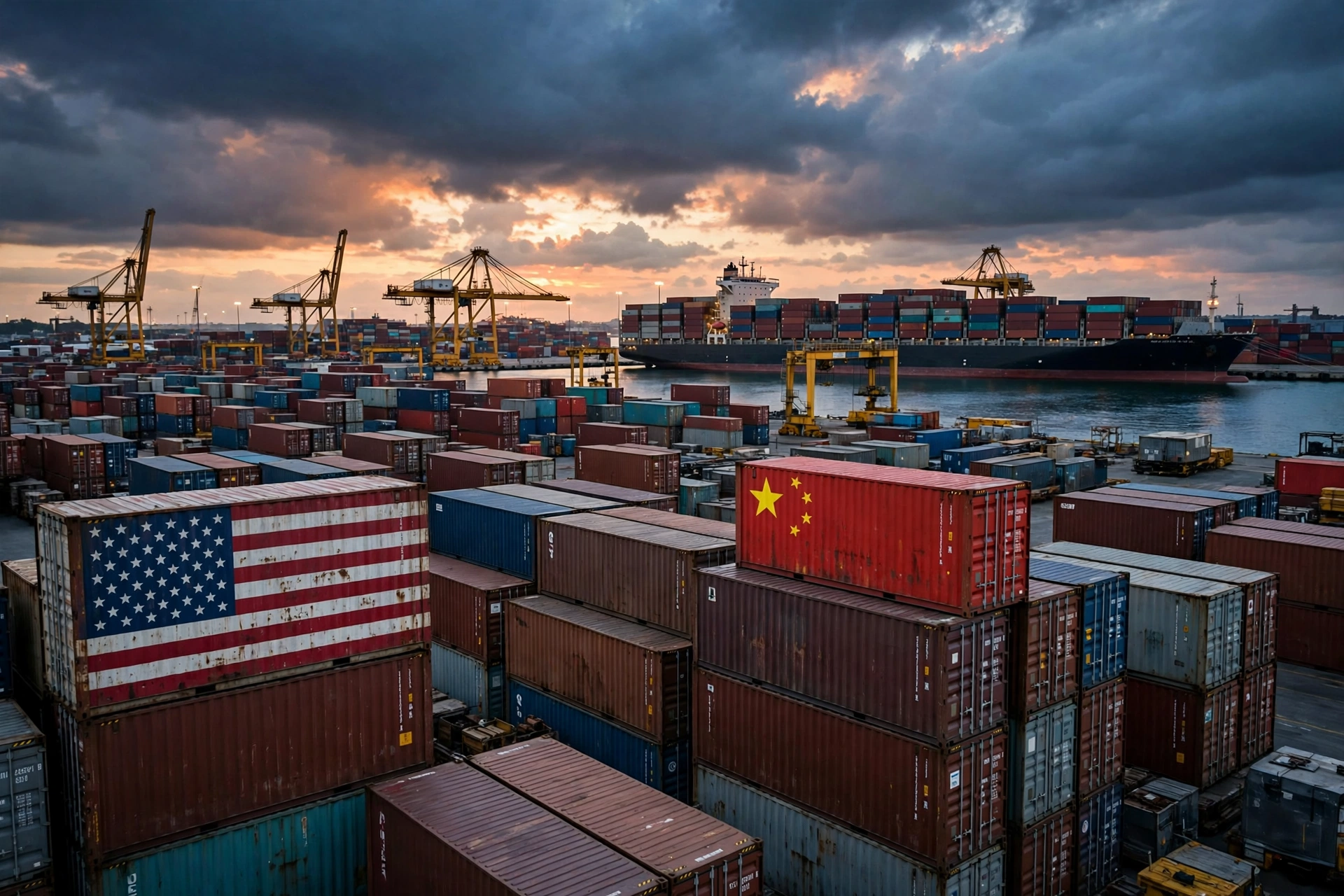
WASHINGTON — US President Donald Trump’s administration on Wednesday unveiled a new round of tariffs on 14 major trading partners, including China, the European Union, Japan and Brazil, in a fresh escalation of its trade policy.
The duties follow an eight-month investigation by the US Trade Representative (USTR) into foreign industrial subsidies and excess manufacturing capacity, covering 12 countries, the 27-member EU and the self-governing island of Taiwan. The investigation was opened under Section 301 of the Trade Act of 1974, a law that allows Washington to retaliate against trade practices it considers unfair.
China will face the steepest increase: an additional 20 per cent tariff, on top of duties of roughly 25 per cent imposed during Trump’s first term. For some Chinese goods, the total rate could reach 45 per cent. The USTR said the rate could rise to 40 per cent if the trade truce between Washington and Beijing, which expires on January 10, breaks down.
Vietnam will face a 20 per cent rate if it reaches a trade agreement with Washington, rising to 35 per cent if negotiations fail. Cambodia, Indonesia, Malaysia, Thailand and Bangladesh will face capped rates of 18 per cent, while Japan, South Korea, Taiwan, the EU and Switzerland will face 15 per cent, including existing most-favoured-nation duties. Singapore will face the lowest rate, at 10 per cent.
Brazil was singled out for additional measures after months of trade talks made no meaningful progress, according to the USTR. Washington proposed a new 10 per cent tariff on finished Embraer commercial aircraft and higher duties on sugar imports above quota.
USTR Jamieson Greer said the tariffs would not take effect until after a public hearing on January 25, and said he did not expect them to rattle the global economy. He said the duties were consistent with trade agreements reached over the past year.
The duties will not stack on top of separate tariffs on cars, steel and aluminium already imposed under different trade laws.
The announcement comes as the administration rebuilds its tariff programme after the US Supreme Court ruled in February that sweeping duties imposed under emergency powers were unconstitutional. The new duties are intended to replace that lost tariff leverage and to put the trade measures on firmer legal ground.
The prospect of new trade barriers weighed on stock markets on Wednesday, with shares falling amid a renewed selloff in technology stocks.
India, which was part of the same investigation, would face a 25 per cent rate, or 17 per cent if it signs a trade deal with Washington — a proposal reported separately.