
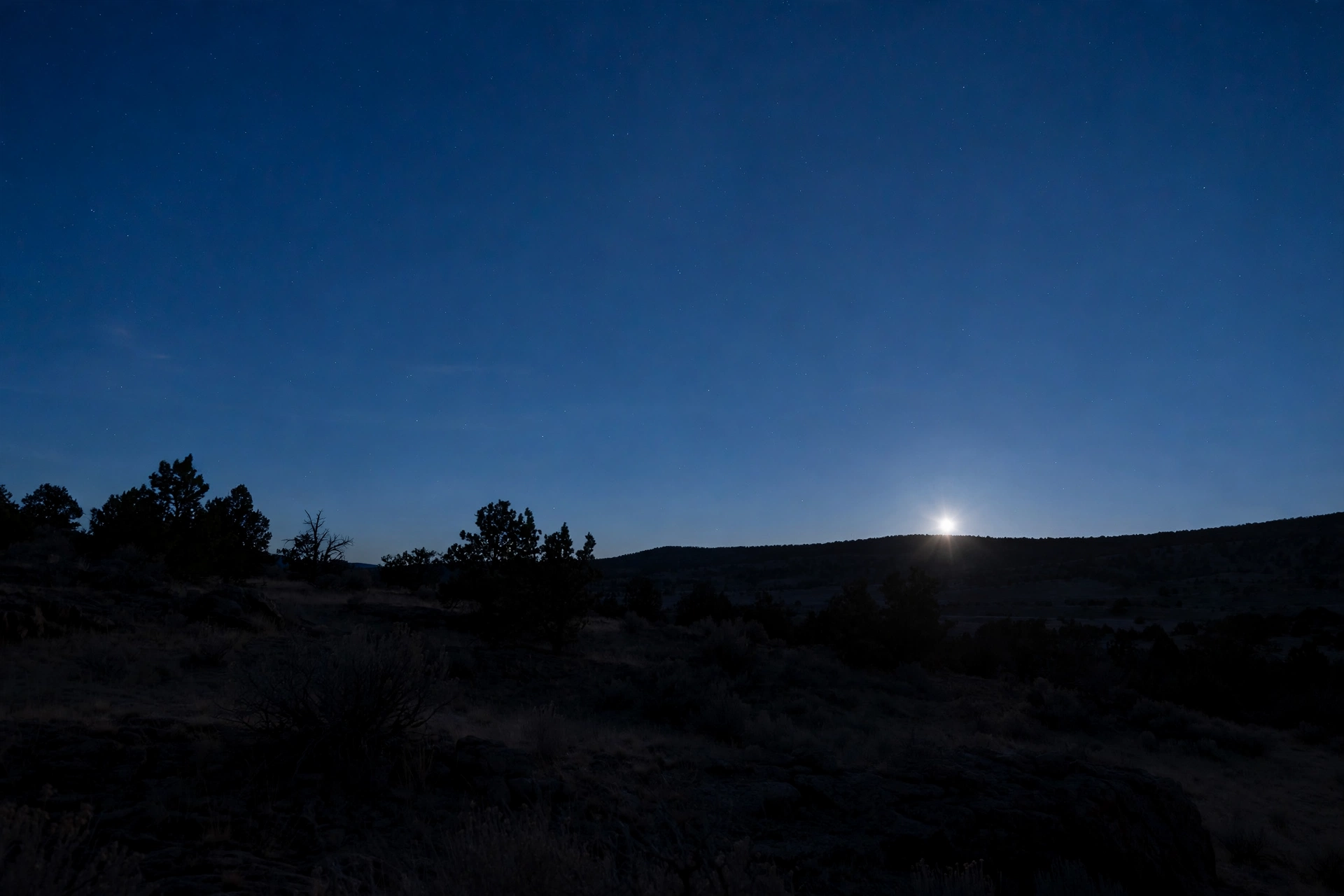
Venus is putting on its brightest show of the year. The planet reached its peak brightness on November 27, 2026, shining at a magnitude of about -4.87 — more than 20 times brighter than Sirius, the brightest star in the night sky.
Known as the Morning Star, Venus is now visible in the pre-dawn sky, low in the east to south-east, in the hour or two before sunrise. No telescope is needed: it appears as a dazzling white point of light, far brighter than any star, and it can be spotted even from a city. A pair of binoculars or a small telescope reveals its crescent phase, like a miniature Moon.
Venus is at its brightest not when it is full, but when it is a thick crescent. The planet is now relatively close to Earth — about 0.40 astronomical units away — and its thick clouds reflect most of the sunlight falling on them, a combination that makes the crescent outshine a full Venus.
The peak is a plateau rather than a single night: Venus stays within a fraction of its maximum brightness from November 27 to December 1, and remains exceptionally bright through about December 2. Astronomers say the exact night matters less than the weather — a clear morning is what counts.
To see it, find a spot with a clear, low view towards the eastern horizon and look up one to two hours before sunrise. Venus does not twinkle much and stands out easily against the dawn glow. Anyone using binoculars or a telescope should stop well before the Sun rises and never aim optics at or near the Sun.